


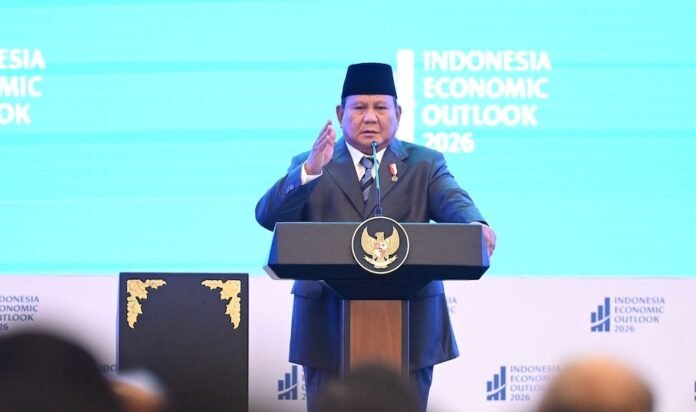
Jakarta, Indonesia enters 2026 with an outlook defined more by stability than momentum. Economic growth is expected to remain around five percent, supported by domestic demand, policy continuity, and macroeconomic stability. At the same time, the scope for acceleration appears limited, as external headwinds, uneven investment outcomes, and persistent labor market pressures continue to weigh on the economy.
Most baseline projections cluster near five percent for 2026. Bank Indonesia has indicated that growth could strengthen modestly compared with 2025, with inflation expected to remain within its 2.5 percent target range. Business sentiment broadly aligns with this view. The Indonesian Employers Association (Apindo) projects growth of 5.0 to 5.4 percent, citing continued domestic demand while cautioning that momentum may soften outside seasonal consumption periods. Other assessments place growth closer to the lower end of the range, pointing to structural bottlenecks and weaker net exports that may limit upside potential.
Household consumption remains the main pillar of growth, accounting for more than half of GDP. Low inflation and ongoing social assistance are expected to continue supporting consumption in 2026. Beneath the headline figures, however, purchasing power remains under strain. Job creation has increasingly been concentrated in lower value-added sectors, with many new positions failing to deliver middle-income wages. Real wages have trended downward over recent years, reducing the strength and durability of consumption-led growth.
Credit conditions reflect a similar pattern. Bank Indonesia’s easing cycle has brought the policy rate down to 4.75 percent, yet lending growth remains uneven, constrained by cautious bank risk appetite, limited project bankability, and subdued demand in parts of the private sector.
Investment continues to provide support, driven largely by domestic capital formation. Official data show that realised investment rose strongly through the first three quarters of 2025, led by transport, logistics, telecommunications, and mining. Special economic zones continue to attract manufacturing and tourism-related projects.
For 2026, the government has set ambitious investment targets, aiming for double-digit growth supported by infrastructure spending, downstream industrialisation, and priority programmes in energy and food security. Foreign direct investment, however, remains a key uncertainty. While downstream metal processing continues to attract capital, a narrow concentration of investment limits employment creation and broader industrial upgrading, particularly as labor-intensive manufacturing remains under pressure.
External trade dynamics face rising challenges. Global trade barriers and tariff-related uncertainty are becoming more persistent, even as export performance in 2025 benefited from strong demand for commodities such as palm oil, iron and steel, and gold. Looking ahead, external conditions are expected to remain less supportive.
Commodity prices present a mixed outlook. Energy prices, particularly coal and crude oil, face downward pressure amid rising global supply and moderating demand, while selected agricultural commodities may remain firmer due to supply constraints.
Policy settings in 2026 reflect a rebalancing rather than an expansionary push. Fiscal policy places greater emphasis on flagship social programmes, including free nutritious meals and village cooperatives. While these measures support near-term demand and human capital objectives, they coincide with tighter fiscal space, as revenue performance remains exposed to softer commodity prices and rising debt servicing costs.
Monetary policy has shifted toward accommodation, with scope for further easing if conditions permit. At the same time, the central bank’s focus on currency stability may limit the pace and depth of additional rate cuts, constraining the overall stimulus effect.
Across these dynamics, the quality of job creation has emerged as a central constraint. While macroeconomic stability remains a core strength, weak wage growth and labor market polarization limit how far steady growth translates into broader welfare gains.
Overall, Indonesia’s outlook for 2026 points to resilience rather than acceleration. Growth is expected to remain near five percent, supported by domestic demand, state-linked investment, and policy continuity. However, subdued purchasing power recovery, uneven investment spillovers into employment, external trade risks, and constrained fiscal and monetary space continue to cap upside potential.
Beyond the near-term cycle, productivity-oriented reforms remain critical. Strengthening digital infrastructure, improving regulatory predictability, and enabling better-quality job creation are increasingly seen as key to lifting Indonesia’s medium-term growth trajectory.